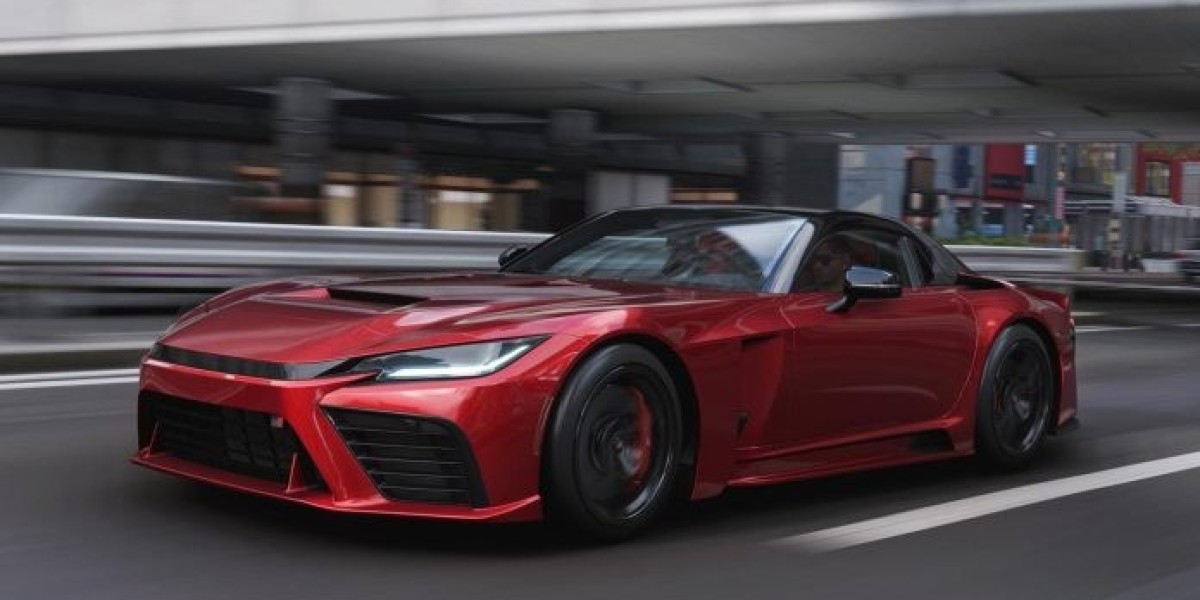

Forza Horizon 6 offers countless opportunities to showcase driving skill, and few techniques are more rewarding than drift tapping. Players who understand this advanced method can hold longer drifts, create smoother transitions, and maximize drift scores during events and free roam. Although many new Forza Horizon 6 Modded Accounts players believe drifting is only about holding the throttle, true control comes from carefully managing steering inputs.
Drift tapping is essentially a sequence of small steering corrections made while the car is already sliding. Rather than locking the steering wheel in one position, the driver continuously makes subtle adjustments that help stabilize the vehicle throughout the drift.
Choosing an appropriate drift car is the foundation of success. Cars with balanced weight distribution, rear-wheel drive, and predictable handling tend to perform best. Excessively powerful cars may look exciting, but they often punish small mistakes. Mid-powered drift builds are generally easier for players who are still developing consistency.
Tuning transforms an ordinary car into a capable drift machine. Suspension stiffness affects how quickly weight transfers across the chassis. Differential settings determine how evenly power reaches the rear wheels, while tire compounds control available grip. A properly tuned car responds smoothly to steering taps instead of reacting unpredictably.
Before attempting drift tapping, become comfortable with basic drifting. Practice initiating slides using throttle, clutch kicks, or feint techniques depending on your preferred driving style. Once you can consistently enter a drift, begin adding gentle steering corrections.
As the rear tires lose traction, countersteer to catch the slide. Instead of freezing the steering wheel, lightly tap left or right whenever the drift angle begins changing. These taps constantly rebalance the car, preventing spins while keeping the drift alive.
Throttle management remains equally important. More throttle increases wheelspin and drift angle, while less throttle allows additional grip. During long corners, drivers often alternate between slight increases and decreases in acceleration while continuing their steering taps. The combination creates impressive stability.
Corner entry speed deserves careful attention. Entering too slowly causes weak drifts that quickly straighten out. Entering too quickly often overwhelms the tires and sends the car off the road. Learning the ideal speed for each corner is one of the biggest factors behind consistent drifting.
Weight transfer plays a major role as well. Every steering input shifts the vehicle's balance. Smooth transitions allow the suspension to settle naturally, making drift tapping far more effective. Abrupt steering movements create sudden weight shifts that frequently end the drift.
Manual transmission gives players greater control over engine power. Holding second or third gear keeps engine speed within the ideal power band, reducing interruptions caused by automatic shifting. Consistent engine speed also makes throttle adjustments easier to predict.
One of the best training methods is repeating the same drift section multiple times. Familiar roads remove uncertainty, allowing players to focus entirely on steering rhythm, throttle timing, and drift angle. As confidence grows, move on to more technical roads with linked corners.
Players should also experiment with different controller configurations. Steering linearity, dead zones, vibration settings, and trigger sensitivity all affect how naturally steering taps feel. There is no universal configuration, so personal preference is important.
Environmental awareness cannot be ignored. Wet roads, elevation changes, and uneven pavement alter vehicle grip. Adjusting drift tapping intensity according to road conditions helps maintain stability in every situation.
Competitive drift events reward consistency more than dramatic slides. Maintaining one continuous drift through several corners usually produces better scores than repeatedly initiating aggressive drifts. Smoothness, precision, and rhythm are far more valuable than excessive angle.
Watching experienced drifters provides useful insights. Observe how little steering movement they actually use. Their steering appears calm because every tap is intentional rather than reactive. Beginners often overcorrect because they attempt to fix mistakes after they occur instead of preventing them.
Replay analysis remains one of the fastest ways to improve. Examine moments where drifts ended unexpectedly. Did the steering correction arrive too late? Was there excessive throttle? Did the car enter the corner too quickly? Small observations often produce major improvements during the next practice session.
Patience is perhaps the most valuable skill. Drift tapping requires muscle memory that develops gradually over many hours of driving. Every successful drift teaches the hands and eyes how the vehicle responds under different conditions.
With enough repetition, drift tapping becomes automatic. Steering corrections become smoother, transitions become cleaner, and drift scores steadily increase. Eventually, players can confidently tackle long mountain roads, technical drift zones, and challenging community events with remarkable control.
Forza Horizon 6 rewards drivers who value precision over aggression. By mastering drift tapping through proper tuning, careful throttle control, and consistent practice, players unlock one of the most enjoyable and FH6 modded accounts visually impressive techniques available in the game.